Wyoming service areas
Find the corridor your material sits in, from Cheyenne to Cody.
Wire we buy
Medium- and high-voltage cable is the highest-value surplus on most industrial sites, and the least likely to be described correctly in an email. Reel tags, voltage class and insulation type decide the quote.
01Overview
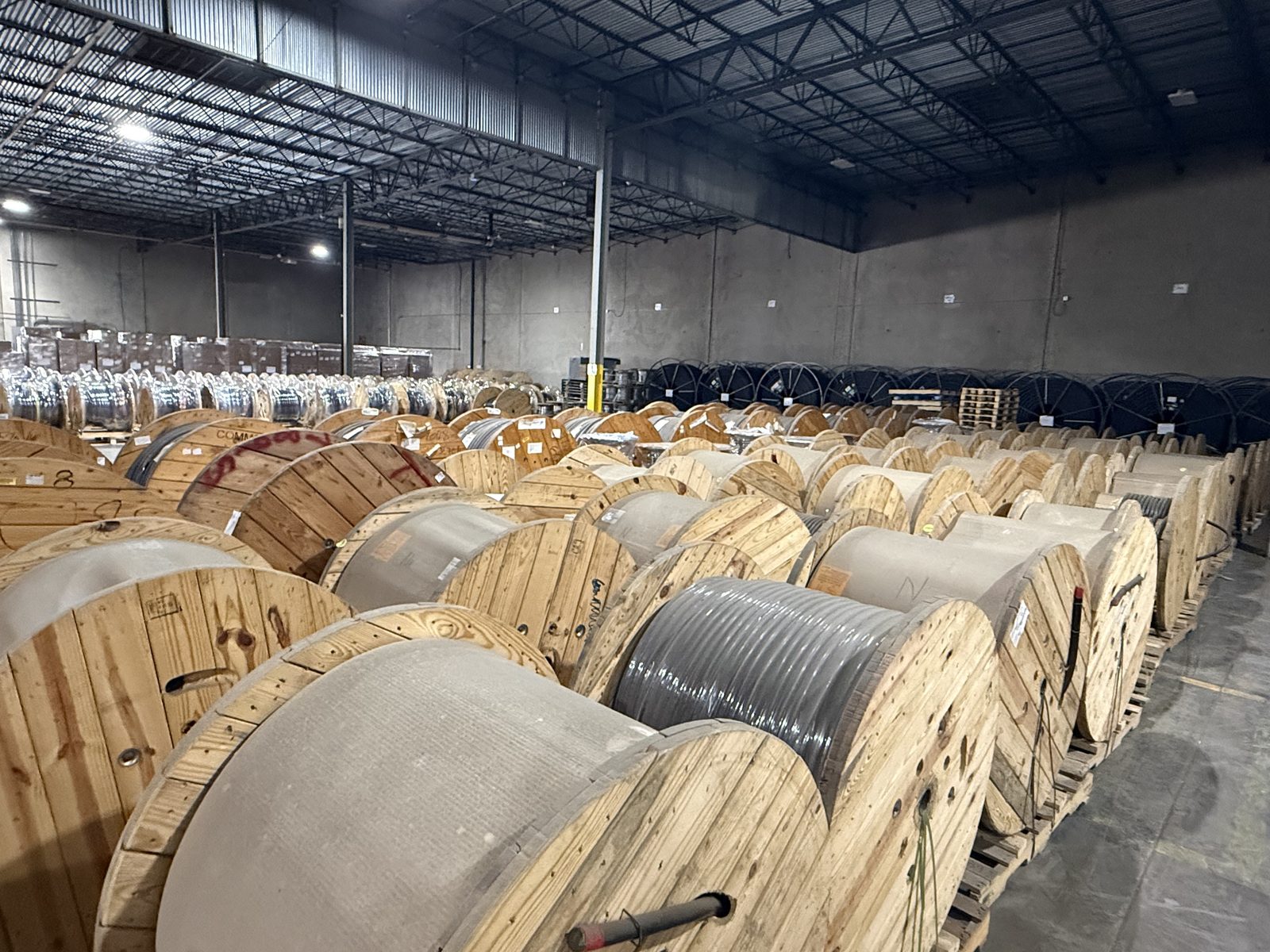
Medium-voltage cable runs from 5kV to 35kV and is used for utility distribution, plant primary distribution, wind and solar collection, and large motor feeders. High-voltage cable at 69kV and above appears in transmission and substation work. Both are built around a conductor, a semiconducting layer, insulation (EPR or XLPE), a shield and an outer jacket, often with a concentric neutral of copper wires for grounded distribution systems.
The value in these lots sits in the reel: voltage class, conductor size and material, insulation type, shield construction and remaining footage. A 15kV 500 MCM copper reel with a readable tag is one of the best lots we can receive. The same reel with no tag is a problem for both of us.
02Specifications
| Voltage classes | 5kV, 8kV, 15kV, 25kV, 35kV, and 69kV and above when available |
|---|---|
| Insulation | EPR (ethylene propylene rubber) or XLPE (cross-linked polyethylene) |
| Conductor | Copper or aluminum, stranded; sizes from #2 through 1000 MCM and larger |
| Shielding | Copper tape shield, wire shield, concentric neutral, or UniShield-type constructions |
| Jacket | PVC or PE, with or without a moisture barrier |
| Packaging we see | Wooden reels from 500 ft to 5,000 ft, partial reels, cut lengths |
03Details
Medium-voltage reel tags carry the manufacturer, voltage class, conductor size and material, insulation type, shield description and length. Photograph the tag flat and in focus, and photograph the printed legend on the jacket if the tag is gone. Two clear photos will save several emails.
MV cable ends must be sealed against moisture. Cable stored outdoors with open, unsealed ends for a long period may have moisture ingress that only testing would reveal. Tell us whether the ends are sealed, capped or heat-shrink protected, and whether the reels were stored on racks or on the ground.
Reels that sat directly on gravel for years often have a damaged outer layer where the reel contacted the ground. That does not automatically disqualify a lot, but it has to be described.
Wind and solar collection systems after a scope change, utility distribution rebuilds and reconductoring, industrial plants after primary feeder replacements, mine and processing facilities, and substation projects where the cable schedule changed after delivery. We also see MV cable from cancelled data-center and manufacturing projects.
04Questions
Only after the construction can be confirmed from the jacket legend or by inspection. Without either, the lot has to be treated as unidentified and the offer will reflect that risk.
Tell us the reel sizes and weights, and the access at the site. Heavy reels need equipment and sometimes a permit; we plan that before pickup rather than during it.
They are different materials with different applications and buyers. The voltage class, conductor and footage matter more than the insulation alone, but the type must be stated correctly.
05Request a quote
Tell us the size, metal, voltage and footage, and attach photos of the tags. If something is unknown, leave it blank and describe it in the notes.
Send the reel details and photos. We will tell you what the lot is worth and how a pickup would work.
06Keep reading
Find the corridor your material sits in, from Cheyenne to Cody.